Nepal · 75 minutes · Meat · Main course · For confident cooks
Shyakpa
For 6 servings · US units
Sherpa stew with hand-torn dough pieces, meat and root vegetables
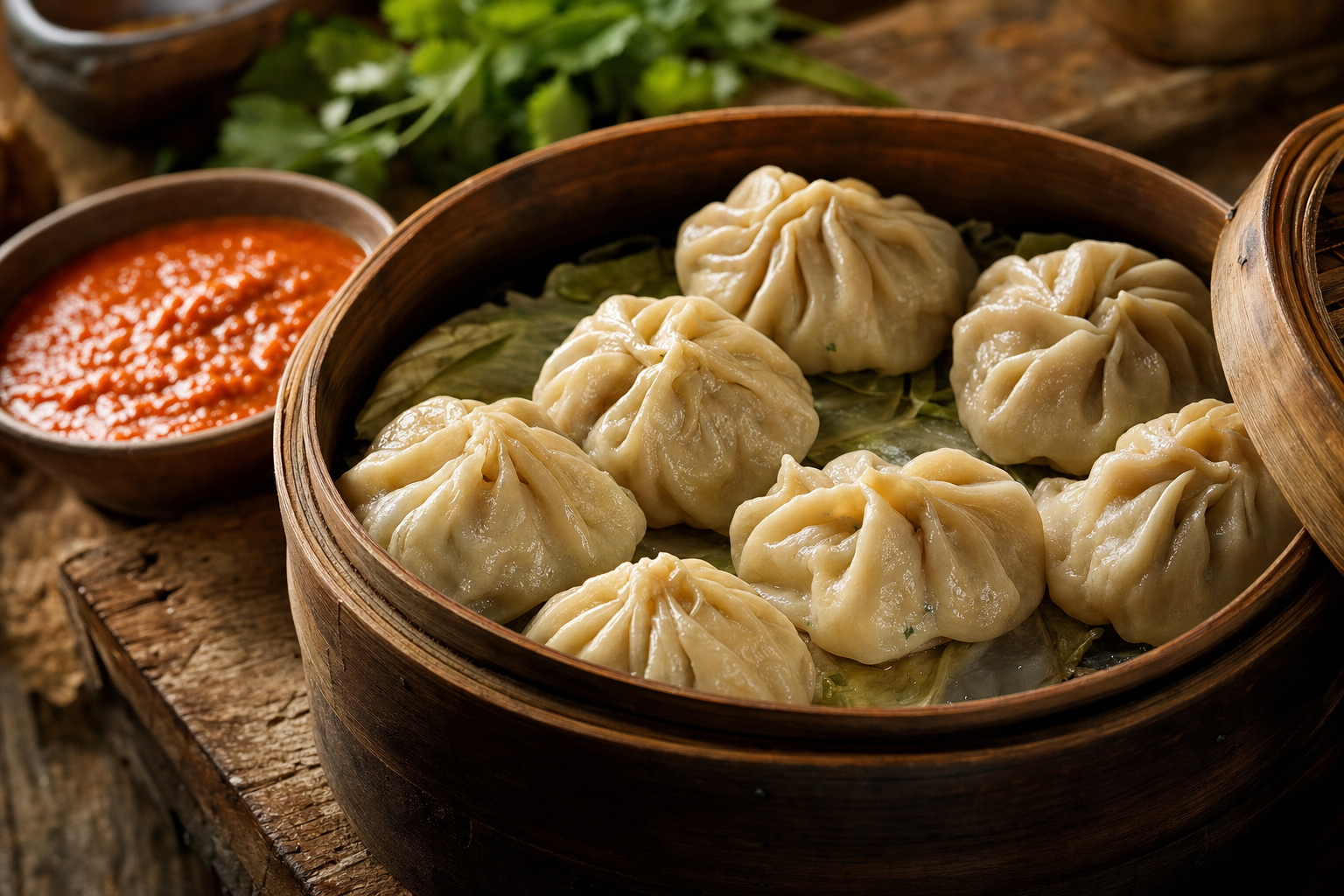
Shyakpa is the traditional stew of the Sherpa, and it's known across the Tibetan cultural world too: a good strong broth with meat, root vegetables and pieces of dough torn by hand from the same simple wheat dough you'd make for momos. Yak is the classic meat, fresh or dried as sukuti, though mutton or buffalo work just as well. It's a whole meal in one bowl — served piping hot with coriander and spring onions on top, exactly what you want on a cold autumn or winter day.
Ingredients
- 10½ ozWheat flourfor the noodle dough
- ¾ cupWatercold, worked into the dough gradually
- 15¾ ozYak, mutton or buffalo meatcut into cubes; dried meat (sukuti) also possible
- 6⅓ ozPotatoesroughly diced
- 5¼ ozCarrotsliced or cut into pieces
- 5¼ ozRadishroughly cut
- 5¼ ozBok choystirred in at the end
- 1Onionsliced or chopped
- 6 clovesGarliccoarsely crushed
- 2 tbspGingergrated or coarsely crushed
- 1 tbspChillicoarsely ground, fresh or as flakes
- 1 tspTurmericground, sautéed with the onions
- 4 tbspOilfor frying and for the dough; ghee or butter as an alternative
- 6⅓ cupsStockmeat or vegetable stock, water as a substitute
- Saltto taste
- 1 bunchCorianderfinely chopped, for sprinkling
- 2Spring onionas garnish (optional)
- 1 tspSichuan pepperground, for seasoning (optional)
- 1 tbspChilli oildrizzled over before serving (optional)
- 7 ozBell pepperdiced, added only at the end (optional)
- 1Tomatodiced, braised along (optional)
Method
- Knead the wheat flour with the cold water and a little oil, adding the water gradually, until you have a smooth, firm dough. Cover it and let it rest while you get everything else ready.
- Cut the meat, potatoes, carrots and radish into pieces of about two centimetres. Roughly chop the bok choy and set it aside separately. Slice or chop the onion, and coarsely crush the garlic and ginger.
- Heat the oil in a large pot and fry the garlic, ginger and chilli briefly until fragrant. Add the onions along with the turmeric and cook until soft and translucent.
- Add the meat and brown it all over on a good high heat.
- Stir in the potatoes, carrots and radish and let them fry along for a few minutes.
- Pour in the stock, bring to the boil and simmer uncovered until the meat and vegetables are about half cooked — roughly 25 to 35 minutes, depending on the meat.
- Meanwhile, roll the dough out thinly, cut it into strips and tear off thumb-sized pieces. Drop them into the simmering soup a few at a time, let them cook through for several minutes, then season with salt.
- Stir in the bok choy just before serving and give it only a few minutes, so it stays green and with a bit of bite.
- Ladle into bowls while hot and serve with chopped fresh coriander, spring onions, a drizzle of chilli oil or a pinch of ground Sichuan pepper (timur).
Tips and variations
For a richer version, fry the meat separately in plenty of oil with ginger and garlic until crisp and stir it into the soup only at the end. Without meat, Shyakpa works just as well with vegetable stock and mushrooms, cabbage, spinach and tomato; bell pepper and tomato also suit the meat version, with the pepper going in only at the end. Dried yak meat (sukuti) gives the broth more depth, and if you're short on time, a stock cube or chicken stock does the job. Its close relative is thukpa: thin noodles, finely cut vegetables, minced meat and considerably more chilli and Sichuan pepper. You can also cook ready-made wheat noodles separately, divide them between the bowls and pour the soup over — seasoned with cumin, coriander seed and soy sauce, with lemon wedges on the side.
Allergens
Contains: Cereals containing gluten
Not every ingredient in this recipe has been checked, so nothing is promised as free from.
These notes follow from this recipe's ingredient list. Ready-made products and brands may contain further allergens — please check the packaging yourself.
Something not right?
This recipe was put together from independent sources and checked before publishing. Even so, a mistake can slip through — an amount that does not add up, a step that does not work as written. If you spot something, write to us: we will look into it and put it right.